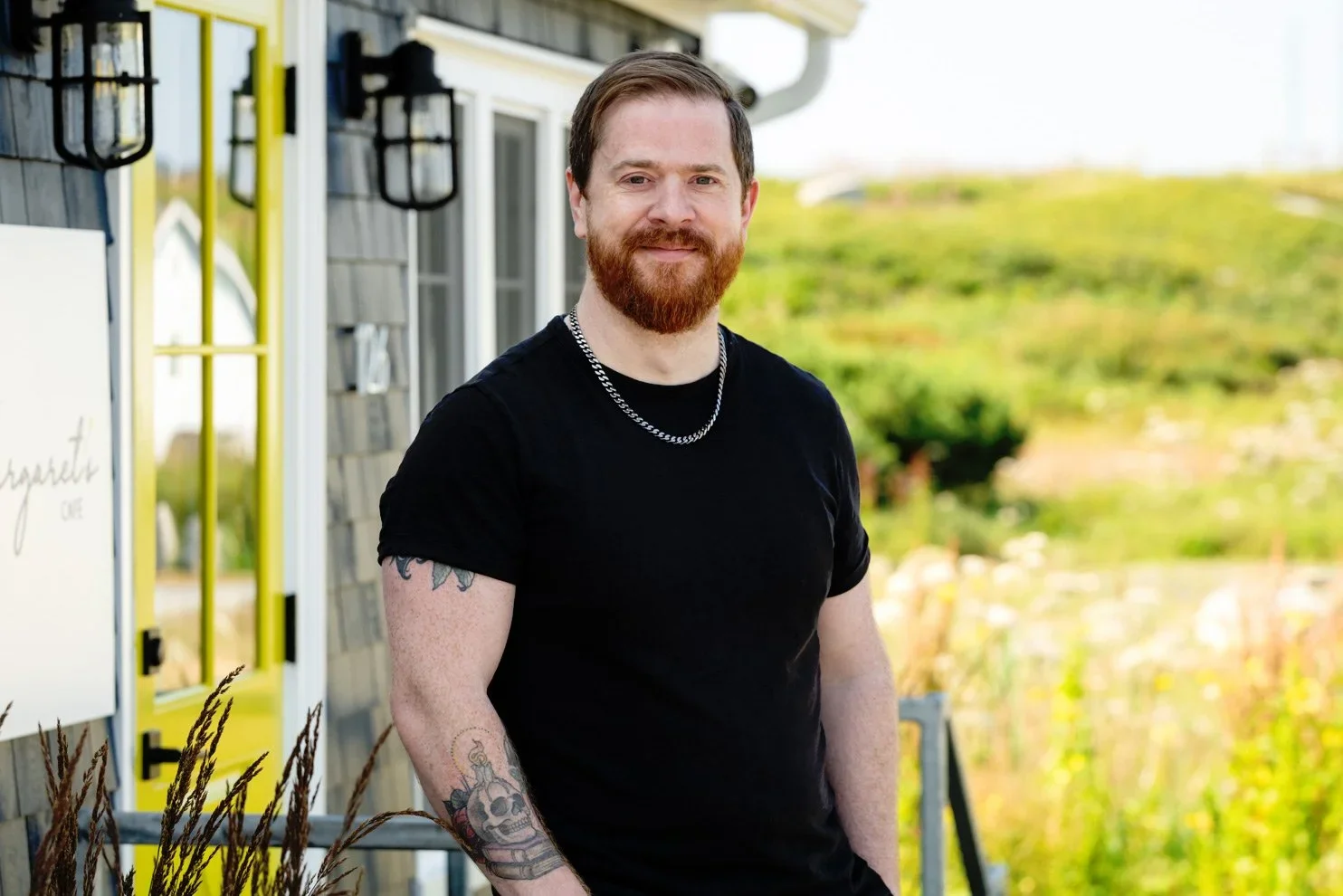
A Graphic Designer's Case for Lived Experience When the Rules Keep Changing
Across creative networks, in studios and on design forums, the same conversation is happening right now: what is the value of a graphic designer in a world that increasingly turns to AI to solve creative problems?
In the face of these technological shifts, I have been reflecting on my time in the industry, the lessons I have learned, and how they have shaped my creative process as a designer.
Twenty years in this industry leave marks that are difficult to account for on a resume. They show up as instincts for how to read a client, creating a targeted client brief, understanding what questions need to be asked, and when a design has hit all its objectives before being shown to the client. That knowledge accumulated slowly, through successes and mistakes made in front of real clients on real projects, with no generative shortcut to bridge the gap.
Design has a set of foundational principles that, once internalized, become as automatic as any other practiced skill: Contrast, Repetition, Alignment, Proximity. They are the grammar of visual communication. When you understand them well enough and apply them long enough, they no longer require conscious thought. You apply them the way you would write your signature or drive a car. Building that fluency is not something that happens quickly, and it does not happen without volume.
The designers coming up now are building their instincts in a different environment than the one I graduated from. They have access to tools that can compress a learning curve that, for my class of 2006, was long and often uncomfortable. When a shortcut exists, there is less reason to take the long way. The long way is where the skills that make designers valuable are built.
Rookie designer, 2006
I graduated from NSCC's Graphic Design program in 2006. Website design at that point was an optional Friday afternoon block, and most of us had no sense of how completely the industry was about to move online.
That meant we spent a lot of time with the print shop students next door. Every project needed to be presented in print-ready form, as though answering a real client brief. Standing in that print shop, I built relationships with students who taught me how the colours on my screen shifted depending on the application, and when a file had a problem, I was there to learn how to correct it before anything went to press. When the files were ready, I cut them down and bound them by hand, so I could see exactly where the preparation affected the final product.
If design principles are the grammar, print production is where you learned cursive writing by hand. The application of every design project back then ended up in a print shop and showed up in the world, and precision and file preparation were mandatory skills.
Like many graduates at the time, my first job in the industry was at a print shop. Working with files every day, I learned exactly how they needed to be set up before anything went to press: colour modes, resolution, bleed, trap, the specific requirements of large-format output. The work was not glamorous, but precision was the job. When a bleed was wrong, I reprinted the materials myself. I went on the truck for installations and learned firsthand how to match a design to its application.
Those skills still inform my work daily, whether setting up files for a client order through Vistaprint or liaising with a print house to ensure files arrive exactly as needed. Print shops are not nearly as common as they once were, and working with younger designers often means resolving file errors between marketing teams and print houses before anything can go to press.
Napkin, 2012
That background served me directly when I joined Napkin, a startup creative agency, in 2012. It was a small team of 4 (myself included) doing brand identity, traditional advertising, reports, and public relations work, and joining a startup meant wearing a lot of hats from the start.
Because I knew how print files needed to be built, the gap between design and output stayed small. More importantly, it was my first real exposure to what design looks like when it has to communicate on behalf of someone else's business.
Startups are inherently unstable, and Napkin was no exception. There were periods where the work was plentiful and periods where payroll was uncertain. Staying through those stretches was a choice I made because I believed in what the team was building. That experience gave me an early and unambiguous lesson in the volatility of the creative industry and what it actually takes to keep showing up when the ground is unsteady.
Because the team was small, my role expanded well beyond production design. I was on location for photo shoots, travelling across the province to meet with clients directly on behalf of the agency, learning how to represent a creative vision in a room where the client needed to feel confident in the work and in the people delivering it.
As the industry shifted toward digital, I was learning web design alongside my existing print and brand work, adding that capability to the team with our developer rather than waiting for someone else to bring it in.
Over time, I moved into an art direction role, hiring junior designers and developers, overseeing creative direction, and learning what it means to defend a design decision to someone who does not share your visual vocabulary.
The standout project of this period was the Dallaire Institute's annual report, a piece I designed with full creative freedom and direct collaboration with the Institute's team. The work earned an Ice Award. It sits on my shelf where I can see it from my desk.
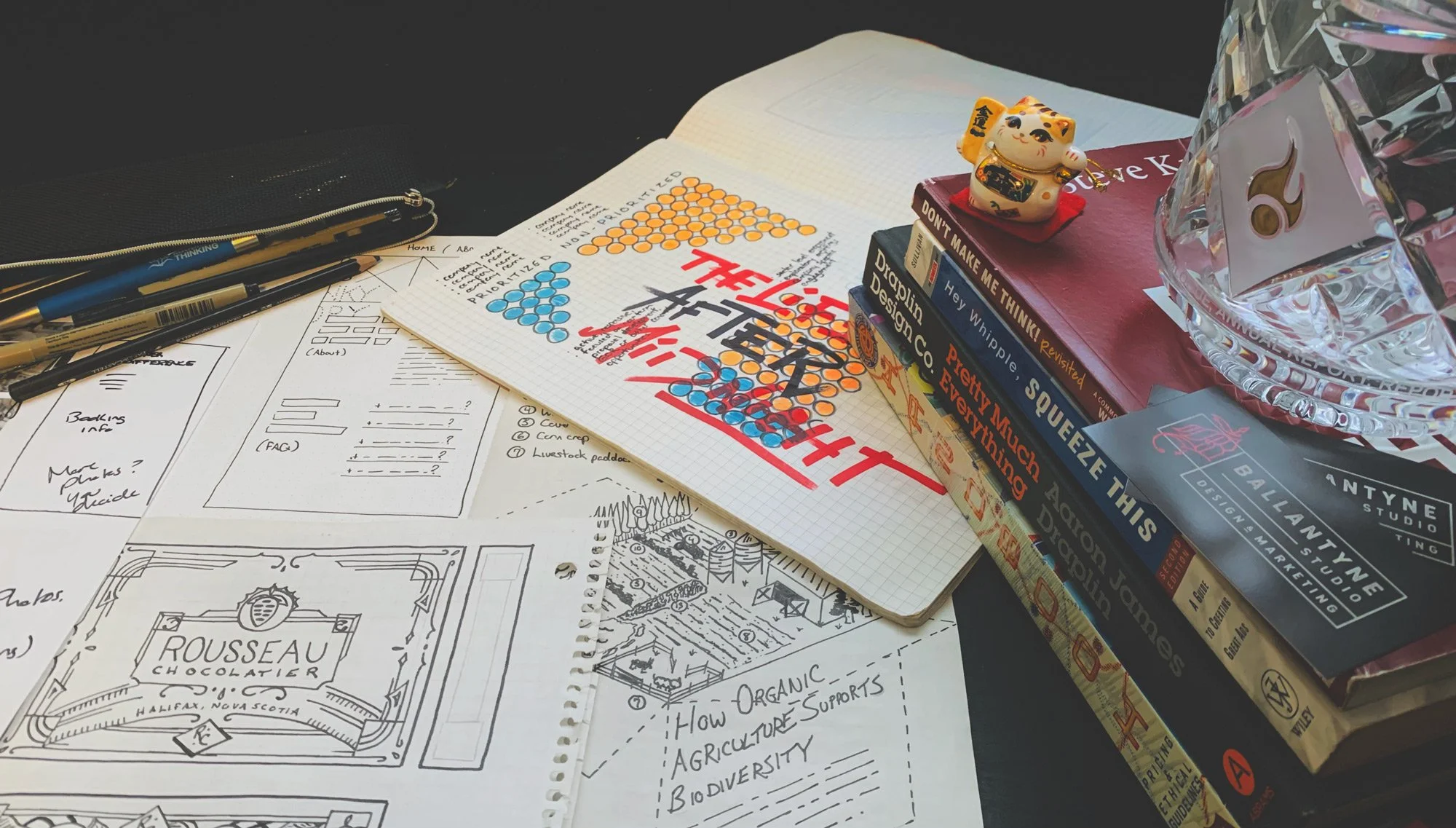
Napkin operated out of a building that happened to share space with a nearly identical agency on the floor directly below. They were doing largely the same work for a similar client base. That company is still in operation today. When Napkin closed in 2016, that fact was not lost on me.
At Napkin, I worked on some of the biggest-name projects of my career. I met my wife, who was just getting into the design industry at the time and had a background in entrepreneurship. I learned that agency life is volatile, that layoffs come when the work dries up, and that contracts (thanks to my now-wife who was a stickler for them) can help maintain relationships and networks of contacts even when the worst happens.
BeHuman Apparel, 2016
When Napkin closed, the agencies I approached were not looking for an art director who had moved from production design to art direction, skipping a few steps of the ladder. From 2015 to 2018, driven by the growth of digital channels and the demand for platform-specific expertise, agencies that had been built around the traditional art director and copywriter model were restructuring to focus on specialists: social media managers, UX designers, web developers, and SEO strategists.
During this period, I had been posting personal creative work on Instagram, and it was that work, combined with the relationships I had maintained through the industry, that led a local agency head to reach out.
Paul LeBlanc, head of Arrivals + Departures, was building BeHuman, a values-driven apparel brand operating as a side project of his agency, and he saw something in my work that he wanted on the project.
Stepping back into a junior role created space I had not had as an art director: time to learn from the specialists around me and reconnect with the part of design I find most interesting: how a person actually experiences what you have made.
Designing motifs for apparel is straightforward, but BeHuman wanted to set itself apart by sharing values that would exist as a part of their customer’s everyday lives. They needed to be relatable, high-quality, and, at the same time, unspecific so the pieces could fit easily into an existing wardrobe.
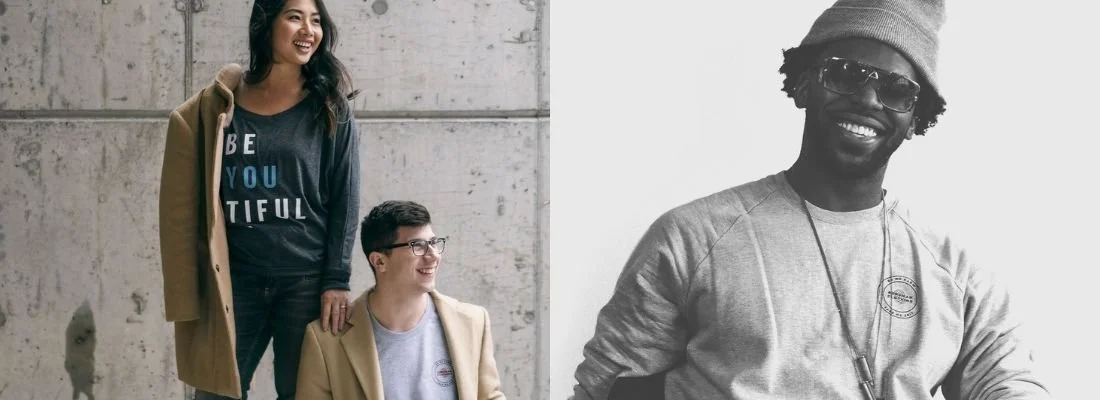
The work taught me how to translate customer research provided by the team into genuine empathy for the customer. Understanding customer psychology at that level, well enough to create designs people would choose to wear through their daily lives, is not something most design briefs require, and it is not something I would have developed without this project. That skill sits at the core of user experience design, and it has informed my approach to briefs ever since.
By 2016, Instagram had become the primary space where apparel brands built their audiences. Working alongside social media specialists for the first time, I learned how design behaves differently when it lives on a body and then needs to be translated to a phone screen. Product photography, video editing, and the specific visual grammar of a social feed were all new territory to learn.
So was e-commerce: building and maintaining the online shop taught me how design decisions directly affect purchasing behaviour, in ways that print never made visible. I was able to translate design principles into a website and learned the hands-on skills I needed to make that design close sales.
WeUsThem, 2017
Working for BeHuman helped me connect with the core of what I’m most passionate about, which is UX design. Not just the interface of the design, but every aspect of how an audience interacts online, on social, or in person, and how the thread of a design connects all those moving pieces. The next step, if I wanted to get serious about UX design, was to move to a position that would teach me more about this skill. When BeHuman was sold, I started working as a junior developer with WeUsThem.
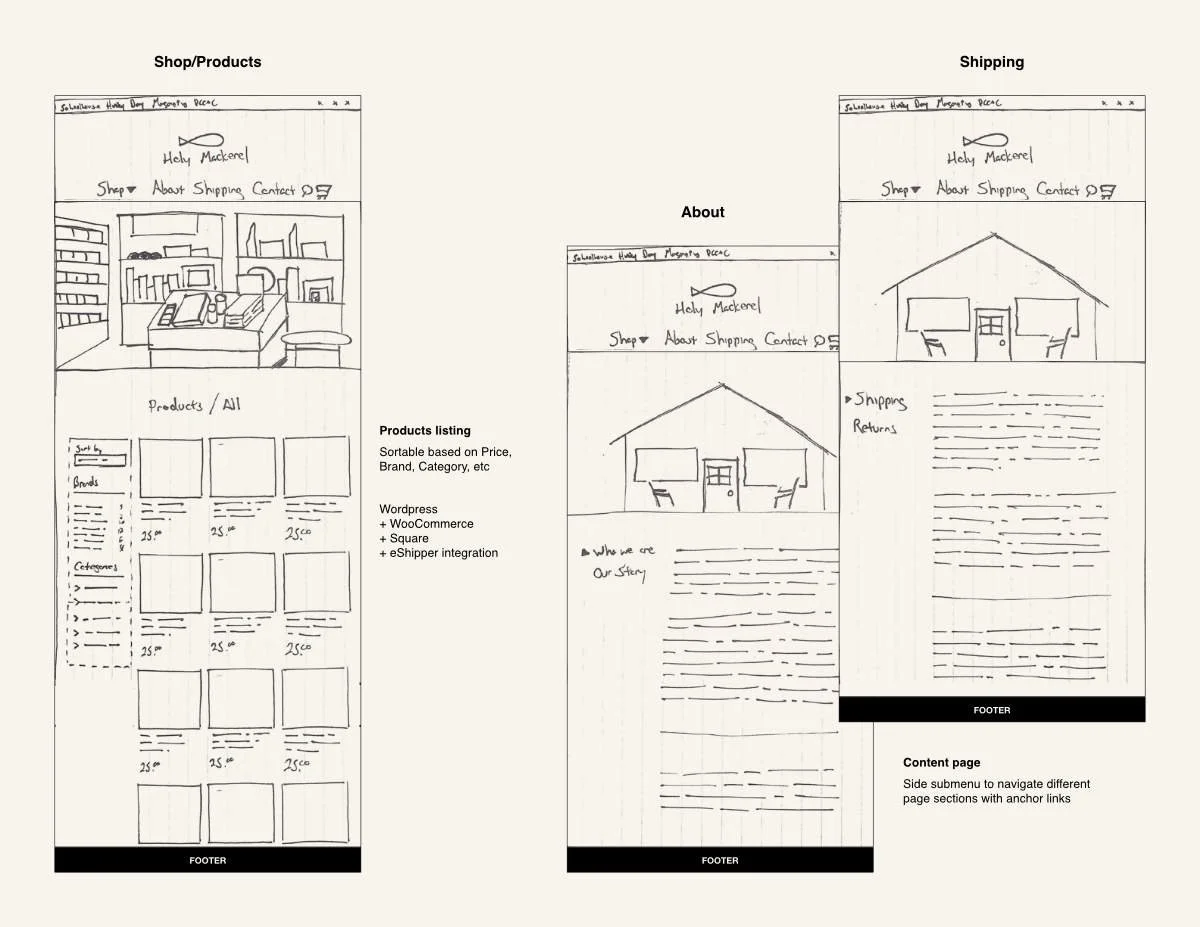
WeUsThem was a digital agency willing to take a graphic designer with no formal web experience and invest in teaching me to build websites, from sitemaps to wireframes to the final product, which became one of my most valuable skills.
Before AI existed to assist with troubleshooting, learning to build for the web meant learning to read and apply code, bending WordPress themes and plugins to fit a client's specific needs, and diagnosing what broke and why when something stopped working. I enjoy the tedium in figuring things out, so this was a part of the job that appealed to me.
The pace was faster than anything I had worked in before, and the margin for error was smaller. On a particularly difficult project, a client was given direct access to request an unlimited number of changes to a website we were working on, with no restrictions on how they could speak to me. At the time, my wife had already moved into freelancing full-time, and I knew her contracts included a limit on revisions and specifications on how clients were allowed to speak to her. This was the first time in my career that I considered moving into freelance work instead, because clear communication and structured feedback channels are vital to good design.
What I took from this period was a deeper understanding of UX/UI design and how to make them actually function online.
Casino Nova Scotia, 2018
From there, I joined Casino Nova Scotia, a significantly larger organization with established teams, vendor relationships, and multi-department processes. The design work was high volume and spanned print, web, and digital advertising, with tight production timelines and direct relationships with commercial printers across two locations
Pitching significant projects, such as website redesigns and member journey overhauls, to departments not naturally inclined toward change required understanding what each stakeholder needed in order to approve the project. At the same time, I was the primary designer for a marketing department serving multiple buyer personas across two locations, producing print, web, and digital advertising simultaneously under tight production timelines.
The ability to work at high volume while seeking growth opportunities for the department is something I developed at Casino Nova Scotia and carry into every role since.
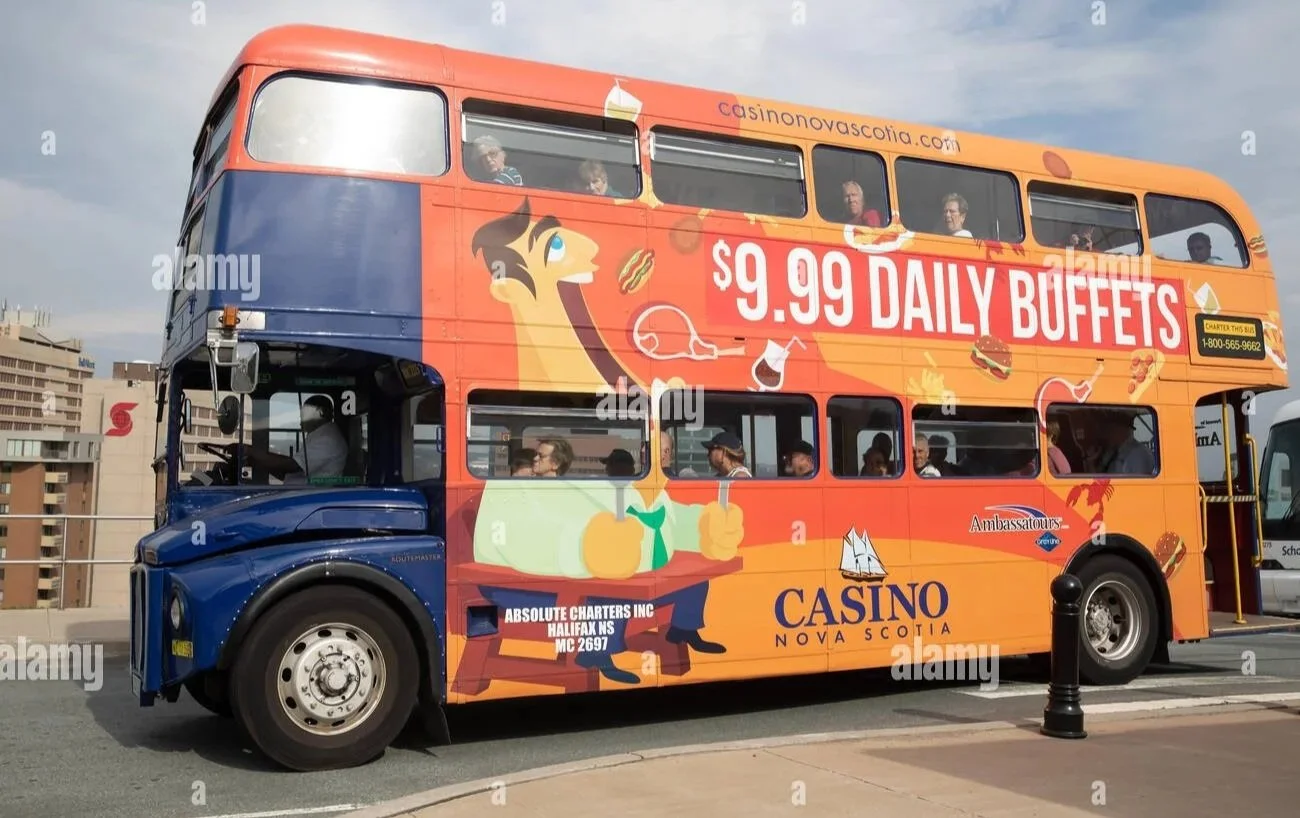
The projects I remember most from this period were the ones that required me to think about design as a communication system rather than a visual exercise: a bus wrap readable in motion at street level serves a fundamentally different purpose than a web banner, and a casino environment comes with a specific audience and specific expectations. Working within those constraints while finding room to move forward was the kind of problem I find genuinely engaging.
There is a consensus among designers that the one you don't love is always the one they pick. Presenting a design you do not believe in is a risk, because if a client selects it, you live with it. There is a bus wrap from this period that still circulates around town, haunting me to this day, and every time my friends or my wife spot it, they send me a photo.
Ballantyne Studio, 2020
When the pandemic hit, the Casino was among the first businesses to close its doors. I was furloughed along with the rest of the marketing team, and the uncertainty that followed was something most people working in hospitality and entertainment will recognize.
My wife was not among them. Crystal Picard Design & Marketing offers full-service support to women in business working solo or in small teams. She had been specializing in real estate and home services, and when the pandemic hit, demand for her services skyrocketed beyond what she could manage alone. She had already brought me on for several projects, and I had taken over the full WordPress side of her offerings as she shifted away from co-leading the local WordPress Meetup.
After a nearly year-long closure ended my position with the Casino, moving into freelancing alongside her was a natural next step. In 2020, I started my own freelance design studio, working primarily with business owners who were trying to get their operations online in the wake of pandemic closures. That meant meeting with clients online to help them define their offerings for a digital audience, working through messaging, building websites across multiple platforms, and setting up social media presences from scratch.
One of the more interesting challenges of this period was the way projects changed scope mid-stream. Clients whose businesses were built around live events, like Lighthouse Arts Centre, had to pivot mid-project from in-person programming to streaming, and back again once restrictions lifted. As this project started with my wife before the pandemic, working within the structured process my wife's business had established for her clients gave the project clear parameters, which made it possible to build a website flexible enough to handle variable needs without missing deadlines.
The work that I’m most proud of from my freelancing aren’t the most technically complex or most stunning designs. Some of the most meaningful projects were the ones where I was able to help a client navigate the funding programs available to small businesses and arts organizations during the pandemic, assisting with applications so the cost of getting their business online was covered. Good design work during that period sometimes meant making sure the client could afford to see it through.
The key to that kind of work is empathy, and freelancing sharpened mine. A client who feels heard gives you a stronger brief, and a stronger brief produces a final product that works for their audience. That connection between listening and designing well is something I had been building toward since BeHuman, and freelancing is where it became the foundation of how I work.
Marine Thinking, 2022
After purchasing a home and getting married in 2022, I made the decision to return to full-time work. Two freelancers under one roof works until it doesn't, and the stability of a salary felt like the right thing to prioritize for my family at that point.
I joined a marine technology company called Marine Thinking as their in-house designer. The scope of the work was the draw: an international team, technically sophisticated subject matter, and an opportunity to work in interactive installation design that I had not encountered before.
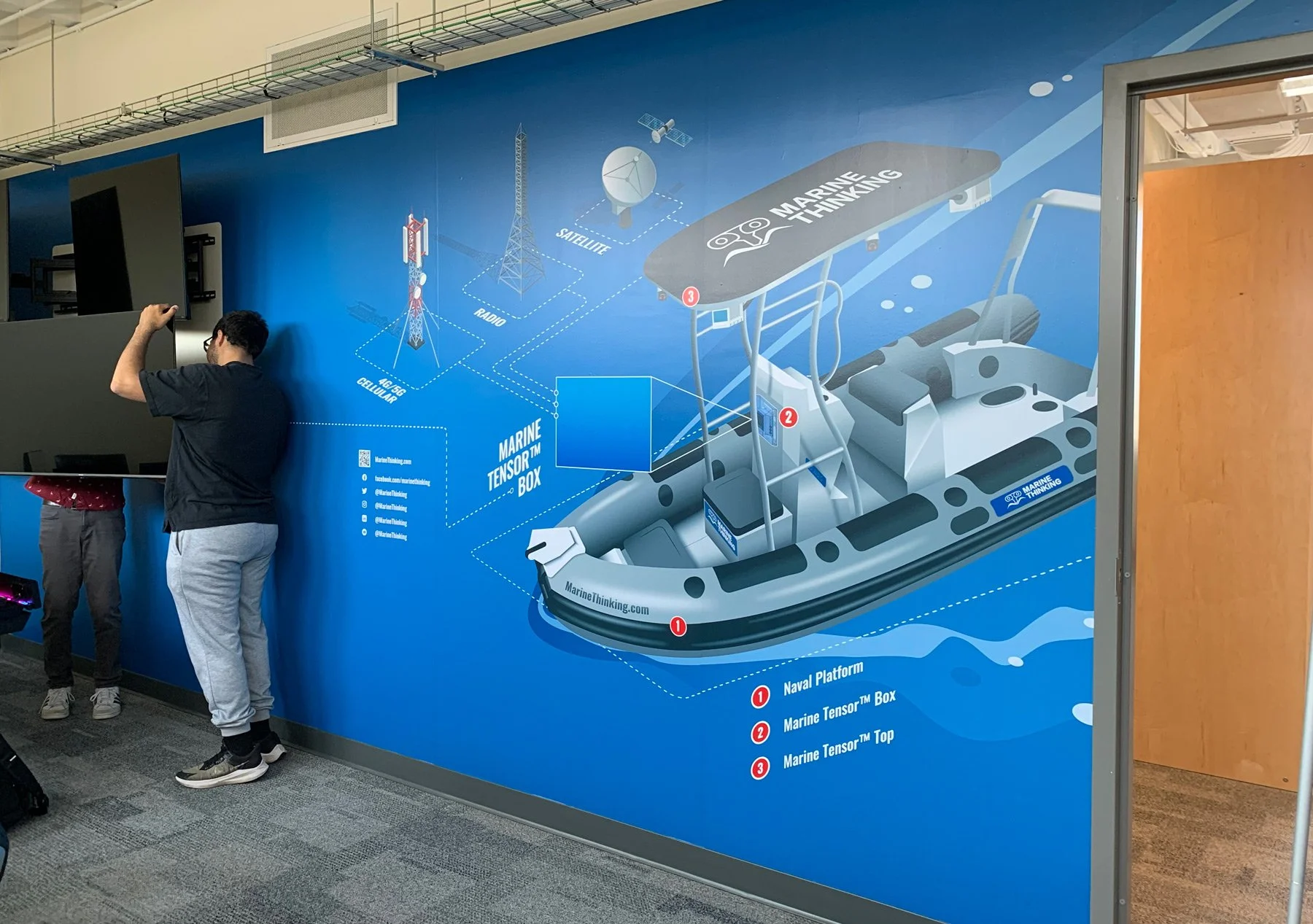
The day-to-day work involved translating developer notes and technical diagrams into customer-facing marketing materials, building web products, and leading the UI design of several digital products and apps. The technical nature of the subject matter meant that every design decision had to serve clarity first, which is a useful constraint for any designer to work under.
As short-form video became the primary way people consumed information online, motion graphics became the answer to how graphic design could exist in that space. Creating motion graphics to translate dense technical subject matter into something an audience could absorb quickly became one of my favourite projects to work on, and it is a discipline I continue to develop in my own time as the tools evolve.
My wife, ever the business opportunist, added motion graphics to her studio's offerings not long after. When a client came to her with a five-day deadline for an entire launch campaign, I gave her my full weekend to help get it across the line. That project was how I first met the owner of The Schoolhouse, who was impressed enough by the quality of the work and the turnaround that she came looking for me not long after.
Around the same time, the volume of work at my current position had begun to lessen, and informal signals from the team suggested the slowdown was not temporary. The timing, as it turned out, worked in everyone's favour.
Six By The Sea, 2023
It wasn't long after The Schoolhouse project that Laurie, the operations manager of Six By The Sea, came looking for me. The group operates six distinct hospitality businesses in the Peggy's Cove area, each with its own brand, audience, and physical presence, plus an overhead brand tying them together. I was brought on remotely to build the websites. Over the following two years, the scope grew considerably.
By the time the contract wound down, I had built and maintained seven websites across the group, including a full e-commerce site for Holy Mackerel, a ticketing system for The Schoolhouse, and a portfolio of sites that I later rebuilt entirely on Square when the client moved away from WordPress.
Translating complex, content-rich sites onto a platform designed primarily as a point-of-sale system required finding creative solutions within significant technical constraints and delivering results the client could manage independently after handoff.
The work extended well beyond the web. Each business required a complete and consistent visual language, developed and maintained across six distinct brands simultaneously:
Holy Mackerel
Holy Mackerel required a full e-commerce build, signage, a shopping wayfinding system, an email marketing system, social media templates, and motion graphics.
Hunky Dory
Hunky Dory required packaging design, menus, motion graphics, product mockups, and social media templates.
Margaret’s Cafe
Margaret's Cafe was a full identity built from the ground up, including logo, menus, interior signage, in-house packaging for all cafe goods, and social media templates.
The Schoolhouse
The Schoolhouse required full custom illustration used across all graphics for the venue, ticketing system management, and all signage and event graphics as well as communication collateral for interacting with hotels in Halifax.
I also developed and managed email marketing campaigns, taking courses in my own time to build that capability, and created social media templates that the on-site teams could use independently. I went on location to film social media campaigns with staff, and spent a number of weekends driving up with my wife there to understand how the design lived in the physical environment alongside the people using it.
Tourism audiences are diverse, and designing for this group of businesses requires understanding several audiences at once. A visitor from out of province is making a different decision than a local considering a day trip, and a customer arriving by word of mouth from the city comes with different expectations than one who found the location through search.
Maintaining a consistent brand across six businesses while designing for those distinct audience segments simultaneously was the real design challenge at the core of the job, one that drew on everything I had built across the previous decades of print production, web, e-commerce, motion graphics, social media, wayfinding, packaging, and identity design, all within the context of a tourism market I had been working in through my freelance practice for years.
The contract was originally scoped around the website builds. Two years later, Six By The Sea had a complete visual identity system, a functioning e-commerce and ticketing infrastructure, and a social media presence built to run without me. I am proud of what that team built together.
How to design like a human in the age of AI
Over the past 20 years, my skills have accumulated in ways that are difficult to separate from one another. Print file preparation, digital design, client communication, UX thinking, motion graphics, e-commerce, wayfinding, identity systems: Each discipline built on the last, and none of it learned without the work that preceded it.
New designers entering the industry now will build their instincts differently because the tools available to them compress parts of the learning curve that, for my class, were long and sometimes brutal.
The fundamentals of design have not changed: you are still solving a communication problem, still taking a need and translating it into a visual language that someone can understand and respond to quickly. What has changed is the environment in which you develop the judgment to do that well.
I have been in this industry through two periods of significant disruption. The first was the shift from print to digital. The second is this one, where designers need to quantify their value in a world increasingly turning to AI to generate visual communications in seconds.
The designers who will navigate it best are the ones who developed their judgment before the shortcuts existed, and who understand the tools well enough to know what the tools cannot do. Twenty years of working without a generative shortcut is what gives me the judgment to know where the tools are useful, and where they are not.
I am not leaving this industry. In my 20 year commitment to this craft, moving from print design to motion graphics to user interface design, I am continuing to find new avenues of creative problem solving and visual communication to be passionate about.
2012 vs 2022
I hope to update this post in another twenty years, or after the next seismic shift in design and advertising we’re made to navigate — whichever comes first.